Reading Public in the 18th and the 19th Centuries
The 18th century in Europe was the Age of Enlightenment and literature explored themes of social upheaval, reversals of personal status, political satire, geographical exploration and the comparison between the supposed natural state of man and the supposed civilized state of man.
Reading Public underwent serious changes in the eighteenth century and the ninth centuries. Many historians argued for the existence of a “reading revolution” in that time. Until 1750, reading with done “intensively: people tended to own a small number of books and read them repeatedly, often to small audience.
After 1750, people began to read “extensively”, finding as many books as they could, increasingly reading them alone. There are records for extremely large private and state-run libraries throughout Europe in the eighteenth-centuries. Of course, the vast majority of the reading public could not afford to own a private library. And while most of the state-run universal libraries set up in the eighteenth-century were open to the public, they were not the only sources of reading material.
There was great interest in reading public in the eighth century and there were many books published and many public libraries were established.
Moving up the classes, a variety of institutions of readers access to material without needing to buy anything. Libraries that lent out their material for a small price started to appear, and occasionally bookstores would offer a small lending library to their patrons. Coffee houses commonly offered books, journals and sometimes even popular novels to their customers. The Tatler and The Spectator, two influential periodicals sold from 1709 to 1714, were closely associated with coffee house culture in London, being both read and produced in various establishments in the city.
It is extremely difficult to determine what people actually read during the 18th century. For example, examining the catalogues of private libraries not only gives an image skewed in favour of the classes wealthy enough to afford libraries, it also ignores censured works unlikely to be publicly acknowledged. For this reason, the study of publishing would be much more fruitful as to hypothesizing reading habits.
In the 18th century -book sellers and publishers had to negotiate censorship laws of varying strictness. Indeed, many publishing companies were conveniently located outside of France as to avoid overzealous French censors. They would smuggle their clandestine merchandise – both pirated copies and censured works – across the border, where it would then be transported to clandestine book sellers or small-time peddlers.
As for the reading public readers were far more interested in sensationalist stories about criminals and political corruption than they were in political theory itself. The second most popular category, general works.
Nevertheless, the Enlightenment was not the exclusive domain of illegal literature, as evidenced by the healthy, and mostly legal, publishing industry that existed throughout Europe. “Mostly legal” because even established publishers and book sellers occasionally ran afoul of the law.
The most books that people red in the 18th century were novels. Borrowing records from libraries in England, Germany and North America indicate that more than 70 percent of books borrowed were novels; that less than 1 percent of the books were of a religious nature supports a general trend of declining religiosity.
The writers in the 18th century were public intellectuals dedicated to solving the real problems of the world. They wrote on subjects ranging from current affairs to art criticism. One of the more famous writers was Jean-Jacques Rousseau. The books that he and many others wrote were snatched up quickly by their broad fan base, even when rulers or churches tried to forbid such things. The enlightenment acquired its name from 1740 to 1789, and even though it caused confrontation between the writers, the government and the churches, it gained widespread support.
The 18th century saw the development of the modern novel as literary genre, in fact many candidates for the first novel in English date from this period, of which Eliza Haywood's 1724 Fantomina is probably the best known. Subgenres of the novel during the 18th century were the epistolary novel, the sentimental novel, histories, the gothic novel and the libertine novel.
18th Century Europe started in the Age of Enlightenment and gradually moved towards Romanticism. In the visual arts, it was the period of Neoclassicism.
People in the 18th century have red for many novelists such as Daniel Defoe, Tobias Smollett, Samuel Richardson, and Henry Fielding.
Daniel Defoe such ambitious debates on society and human nature ran parallel with the explorations of a literary form finding new popularity with a large audience, the novel. Defoe, for example, fascinated by any intellectual wrangling, was always willing (amid a career of unwearying activity) to publish his own views on the matter currently in question, be it economic, metaphysical, educational, or legal.
His lasting distinction, though earned in other fields of writing than the disputative, is constantly underpinned by the generous range of his curiosity. Only someone of his catholic interests could have sustained, for instance, the superb Tour Thro' the Whole Island of Great Britain (1724-27), a vivid, county-by-county review and celebration of the state of the nation. He brought the same diversity of enthusiasms into play in writing his novels. The first of these, Robinson Crusoe (1719), an immediate success at home and on the Continent, is a unique fictional blending of the traditions of Puritan spiritual autobiography with an insistent scrutiny of the nature of man as social creature and an extraordinary ability to invent a sustaining modern myth. A Journal of the Plague Year (1722) displays enticing powers of self-projection into a situation of which Defoe can only have had experience through the narrations of others, and both Moll Flanders (1722) and Roxana (1724) lure the reader into puzzling relationships with narrators the degree of whose own self-awareness is repeatedly and provocatively placed in doubt.
As for Samuel Richardson, the enthusiasm prompted by Defoe's best novels demonstrated the growing readership for innovative prose narrative. Samuel Richardson, a prosperous London printer, was the next major author to respond to the challenge. His Pamela: or, Virtue Rewarded (1740, with a less happy sequel in 1741), using (like all Richardson's novels) the epistolary form, tells a story of an employer's attempted seduction of a young servant woman, her subsequent victimization, and her eventual reward in virtuous marriage with the penitent exploiter. Its moral tone is self-consciously rigorous and proved highly controversial. Its main strength lies in the resourceful, sometimes comically vivid imagining of the moment-by-moment fluctuations of the heroine's consciousness as she faces her ordeal. Pamela herself is the sole letter writer, and the technical limitations are strongly felt, though Richardson's ingenuity works hard to mitigate them. But Pamela's frank speaking about the abuses of masculine and gentry power sounds the skeptical note more radically developed in Richardson's masterpiece, Clarissa: or, the History of a Young Lady (1747-48), which has a just claim to being considered the most reverberant and moving tragic fiction in the English novel tradition. Clarissa uses multiple narrators and develops a profoundly suggestive interplay of opposed voices. At its centre is the taxing soul debate and eventually mortal combat between the aggressive, brilliantly improvisatorial libertine Lovelace and the beleaguered Clarissa, maltreated and abandoned by her family but abiding sternly loyal to her own inner sense of probity. The tragic consummation that grows from this involves an astonishingly ruthless testing of the psychological natures of the two leading characters. After such intensities, Richardson's final novel, The History of Sir Charles Grandison (1753-54), is perhaps inevitably a less ambitious, cooler work, but its blending of serious moral discussion and a comic ending ensured it an influence on his successors, especially Jane Austen.
But Henry Fielding turned to novel writing after a successful period as a dramatist, during which his most popular work had been in burlesque forms. His entry into prose fiction was also in that mode. An Apology for the Life of Mrs. Shamela Andrews (1741), a travesty of Richardson's Pamela, transforms the latter's heroine into a predatory fortune hunter who cold-bloodedly lures her booby master into matrimony. Fielding continued his quarrel with Richardson in The History of the Adventures of Joseph Andrews (1742), which also uses Pamela as a starting point but which, developing a momentum of its own, soon outgrows any narrow parodic intent. His hostility to Richardson's sexual ethic notwithstanding, Fielding was happy to build, with a calm and smiling sophistication, on the growing respect for the novel to which his antagonist had so substantially contributed. In Joseph Andrews and The History of Tom Jones, a Foundling (1749) Fielding openly brought to bear upon his chosen form a battery of devices from more traditionally reputable modes (including epic poetry, painting, and the drama). This is accompanied by a flamboyant development of authorial presence. Fielding the narrator buttonholes the reader repeatedly, airs critical and ethical questions for the reader's delectation, and urbanely discusses the artifice upon which his fiction depends. In the deeply original Tom Jones especially, this assists in developing a distinctive atmosphere of self-confident magnanimity and candid optimism. His fiction, however, can also cope with a darker range of experience. The Life of Mr. Jonathan Wild the Great (1743), for instance, uses a mock-heroic idiom to explore a derisive parallel between the criminal underworld and England's political elite, and Amelia (1751) probes with sombre precision images of captivity and situations of taxing moral paradox.
In France, This century of enormous economic, social, intellectual and political transformation produced two important literary and philosophical movements.
They applied rationalism and scientific analysis to society; and a very different movement, which emerged in reaction to the first movement; the beginnings of Romanticism, which exalted the role of emotion in art and life.
In common with a similar movement in England at the same time, the writers of 18th century France were critical, skeptical and innovative. Their lasting contributions were the ideas of liberty, toleration, humanitarianism, equality, and progress, which became the ideals of modern western democracy.
In other words I can say that the novel in the 18th century saw innovations in form and content which opened the way for the modern novel, a work of fiction in prose recounting the adventures or the evolution of one or several characters. In the 18th century the genre of the novel enjoyed a great increase in readership, and was marked by the effort to convey feelings realistically, through such literary devices as first-person narration, exchanges of letters, and dialogues, all trying to show, in the spirit of the lumieres, a society which was evolving. The French novel was strongly influenced by the English novel, through the translation of the works of Samuel Richardson, Jonathan Swift, and Daniel Defoe. The novel of the 18th century explored all the potential devices of a novel - different points of view, surprise twists of the plot, engaging the reader, careful psychological analysis, realistic descriptions of the setting, imagination, and attention to form. The texts of the period are difficult to neatly divide into categories, but they can loosely be divided into several subgenres.
Magazines were one of publishing tools in the 18th century with increasing literacy especially among women—and a quickening interest in new ideas, the magazine filled out and became better established. Though they resembled newspapers in the frequency of their appearance, they were more like magazines in content.
As for the 19th century that is dominated by the Victorian era, characterized by Romanticism, with Romantic poets such as William Wordsworth, Lord Byron or Samuel Taylor Coleridge and genres such as the gothic novel.
The period of the start of 19th century merges into a Classicist and Romantic period, epitomized by the long era of Goethe's activity, covering the first third of the century.
In the later 19th century, Romanticism is countered by Realism and Naturalism. The late 19th century, known as the Belle Époque, with its Fin de siècle retrospectively appeared as a "golden age" of European culture, cut short by the outbreak of World War I.
Reading public in the 19th century witnessed great range of years is, that has many novels and articles that were written from (roughly) 1799 to 1900. Many of the developments in literature and public reading in this period parallel changes in the visual arts and other aspects of 19th century culture.
This period of the late 18th century merges into a Classicist and Romantic period, epitomized by the long era of Goethe's activity, covering the first third of the century.
In Britain, the 19th century is dominated by the Victorian era, characterized by Romanticism, with Romantic poets such as William Wordsworth, Lord Byron or Samuel Taylor Coleridge and genres such as the gothic novel and the fashionable novel.
In the later 19th century, Romanticism is countered by Realism and Naturalism. The late 19th century, known as the Belle Époque, with its Fin de siècle retrospectively appeared as a "golden age" of European culture .In the middle of the nineteenth century the push for truly public libraries, paid by taxes and run by the state gained force after numerous depressions, droughts, wars and revolutions in Europe, felt mostly by the working class.
Reading public flourished in the ninth century specially the romanticism that began in Europe in the late 18th century and was most influential in the first half of the 19th century.
The Victorian Age is marked roughly by the reign of Queen Victoria of England from 1837-1901.
The Victorian reading public firmly established the novel as the dominant literary form of the era. The novel is the most distinctive and lasting literary achievement of Victorian literature.
Earlier in the century Sir Walter Scott had created a large novel-reading public and had made the novel respectable.
The publication of novels in monthly installments enabled even the poor to purchase them.
The novelists of the Victorian era accepted middle class values, treated the problem of the individual's adjustment to his society, emphasized well-rounded middle-class characters and portrayed the hero as a rational man of virtue and believed that human nature is fundamentally good and lapses are errors of judgment corrected by maturation. The Victorian novel appealed to readers because of its realism, impulse to describe the everyday world the reader could recognize, introduction of characters who were blends of virtue and vice, attempts to display the natural growth of personality, and expressions of emotion: love, humor, suspense, melodrama, pathos (deathbed scenes), and moral earnestness and wholesomeness, including crusades against social evils and self-censorship to acknowledge the standard morality of the times.
People in the 19th century red for a huge literary output during the 19th century. Some of the most famous writers included the Russians Leo Tolstoy, Anton Chekov and Fyodor Dostoevsky; the English Charles Dickens, John Keats, and Jane Austen; the Scottish Sir Walter Scott; the Irish Oscar Wilde; the Americans Edgar Allan Poe, Ralph Waldo Emerson, and Mark Twain; and the French Victor Hugo, Honoré de Balzac, Jules Verne and Charles Baudelaire.
Also, people in the ninth century red for women writers who have made an impact through their fiction or journalism or poetry. From the women writers in the 19th century Frances Hodgson Burnett, 1849-1924, Hannah Adams, 1755-1831, Kate Chopin, 1851-1904, Maria Edgeworth, 1767-1849, and Martha Finley, 1828-1909.
References :
1-Czech Literature And The Reading Public Lecture given at the University of Glasgow Igor Hajek Memorial Conference, 26th November 1995.
2- Lang, Sean. European History for Dummies. West Sussex: John Wiley & Sons, LTD. 2006.
3- Mckay, Hill, Buckler. A History of World Societies: Volume II Since 1500. Boston: Houghton Mifflin Company. 1992.
4- Jonathan Israel, Radical Enlightenment: Philosophy and the Making of Modernity, 1650-1750 Oxford, 2001.
5- Erin Mackie, The Commerce of Everyday Life: Selections from The Tatler and The Spectator (Boston : Bedford/St. Martin's, 1998), 16.
Asma AL-Qunisi . Asma AL-Dliqan .Afnan AL-Shabwi . Al Dana Alghuraibi
Alhanoof Al-qassim . Tahani AL-Shehry . Hanan Al-Tamimi
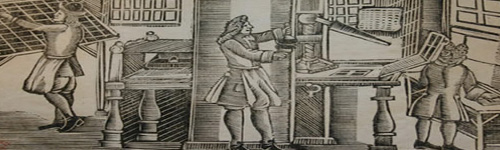
One of the most critical elements of the 18th century was the increasing availability of printed material, both for readers and authors. Books fell in price dramatically. This was furthered with the establishment of periodicals, including The Gentleman's Magazine and the London Magazine. Before copyright, pirate editions were commonplace, especially in areas without frequent contact with London. Pirate editions thereby encouraged booksellers to increase their shipments to outlying centers like Dublin.
All types of literature were spread quickly in all directions. Newspapers not only began, but they multiplied.. Periodicals were exceedingly popular, and the art of essay writing was at nearly its apex. The latest books of scholarship had "keys" and "indexes" and "digests" made of them that could popularize, summarize, and explain them to a wide audience. Books of etiquette, of correspondence, and of moral instruction and hygiene multiplied. Economics began as a serious discipline, but it did so in the form of numerous "projects" for solving England's (and Ireland's, and Scotland's) ills. In short, readers in the 18th century were overwhelmed by competing voices. True and false sat side by side on the shelves, and anyone could be a published author.
The positive side of the explosion in information was that the 18th century was markedly more generally educated than the centuries before. Education was less confined to the upper classes than it had been in prior centuries. It was an age of "enlightenment" in the sense that the insistence and drive for reasonable explanations of nature and mankind was a rage. It was an "age of reason" in that it was an age that accepted clear, rational methods as superior to tradition. However, there was a dark side to such literacy as well, a dark side which authors of the 18th century felt at every turn, and that was that nonsense and insanity were also getting more adherents than ever before. As with the world-wide web in the 21st century, the democratization of publishing meant that older systems for determining value and uniformity of view were both in shambles. Thus, it was increasingly difficult to trust books in the 18th century, because books were increasingly easy to make and buy.
The literature of the 18th century—particularly the early 18th century, which is what "Augustan" most commonly indicates—is explicitly political in ways that few others are because the professional author was still not distinguishable from the hack-writer.
The satires produced during the Augustan period were occasionally gentle and non-specific—commentaries on the comically flawed human condition. Consequently, readers of 18th-century literature today need to understand the history of the period more than most readers of other literature do. The authors were writing for an informed audience and only secondarily for posterity. 18th-century poetry of all forms was in constant dialog. Therefore, history and literature are linked in a way rarely seen at other times. On the one hand, this metropolitan and political writing can seem like coterie or salon work, but, on the other, it was the literature of people deeply committed to sorting out a new type of government, new technologies, and newly vexatious challenges to philosophical and religious certainty.
Prose
The essays thrived in the age, and the English novel was truly begun as a serious art form. Literacy in the early 18th century passed into the working classes, as well as the middle and upper classes (Thompson, Class). The literate, circulated libraries in England in the Augustan period.
Secular learning could now produce ideas more fascinating to intelligent men than theology. An anthology including the famous Methodus of the French political philosopher Jean Bodin, was published at Basel in 1576.. It has been estimated that between 1460 and 1700 at least 2,500,000 copies of 17 leading ancient historians were published in Europe.
Immense progress was taking place in mathematics, astronomy, and physics. History not only did not seem capable of much further development, but scientifically minded men were beginning to dismiss it as a branch of knowledge that would never be worthy of serious respect.
One major obstacle to the progress of historiography was the hostility of rulers to publications that did not favour their governments. In 1599 Elizabeth I of England censured an author for describing the deposition of one of her predecessors, Richard II. The great jurist Hugo Grotius avoided in his history of the wars of the Dutch against Spain discussions of the religious aspects.
written by :
Tagred Al_Amry
