The Marriage In 16th & 18th Century ( Jane Austen )
In the 16th century :
Most women in the 16th century were wives and mothers. Life could be hard for spinsters. Often they lived with relatives but they had to work long hours to support themselves. Tudor England was a hierarchical society in which everybody, male and female, was supposed to know his or her place. Everybody was meant to defer to his or her superiors. In theory married women were supposed to obey their husbands. One writer in the mid-16th century said that women and horses needed to be 'well governed'. Another in the late 16th century urged men to treat their wives gently. He compared them to glass vessels that needed careful handling. Women were seen as 'the weaker vessel' even though most of them had to do hard manual work.
Nevertheless men were allowed to hit their wives to 'chastise' or 'correct' them. Most people believed that a man had authority over his wife. He was her 'lord' and he had a right to 'chastise' her. However it is a myth that a man had a right to beat his wife provided he used a stick no thicker than his thumb See Historical Myths. There never was any such rule or law in England. Nevertheless in the 16th century masters were allowed to beat their servants and teachers hit boys on their backsides with bundles of birch twigs. It was a violent age and it was thought perfectly acceptable that those in authority (such as husbands, masters and teachers) should beat those below them.Furthermore a married woman could not own property. Legally everything she had belonged to her husband. Furthermore a woman who murdered her husband was guilty of petty treason. High treason was of course an offence against the king but certain kinds of murder were defined as petty treason. These were: the murder of a man by his wife, the murder of a master by a servant and the murder by a clergyman of his superior. All these were cases where a person murdered somebody with lawful authority over them and were regarded as a form of treason. The punishment for a woman who murdered her husband was burning. (Although the executioner usually strangled the woman with a rope before burning her).
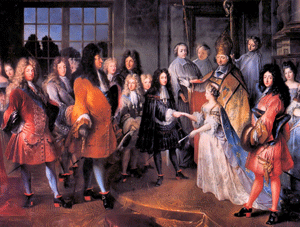
In the 16th century marriages were usually arranged, except for the poorest people. Divorce was unknown. (Though marriages were occasionally annulled. That is it was declared they had never been valid). Legally girls could marry when they were 12 years old. However normally it was only girls from rich families who married young. The majority of women married in their mid-20s. Childbirth was dangerous in the 16th century. Many women died 'in childbirth' (actually they usually died after giving birth because the midwives hands were dirty and the unfortunate woman became infected). Poor women tended to give birth about once every two years. Rich women gave birth more often, perhaps once a year. That was because poor women breast-fed, which reduced their fertility. Rich women gave their babies to wet nurses to breastfeed.
By : Sara Abdulla Aburohain
In The 18th Century
(Jane Austen )
AUSTEN'S WRITING:
Jane Austen, the author of literary classics including Pride and Prejudice, Sense and Sensibility, and Emma, the book upon which Clueless is based. This recent resurgence of Jane Austen in modern America almost two centuries after her death is partially due to the fact that Austen's writing transcends time and place. Although deeply rooted in the late eighteenth and early nineteenth centuries, Austen's books, especially Pride and Prejudice and Sense and Sensibility, hold universal truths still applicable to people today, showing people stuck in a situation and coping with it the best way they can.
During the late 1700's and early 1800's, England was embroiled in the Napoleonic Wars and Romanticism dominated European literature. However, Jane Austen, one of the premier authors of her time, made absolutely no reference in her novels either to the historical events of the literary movement taking place in the world around her. Instead, she wrote about what she knew: women and the conditions in which they lived. Due to the narrow scope of her works, Austen was able to show the standards of eighteenth and nineteenth century society, standards which "impose some order and control on a situation that in fact gave scope for great suffering and disastrous marriages, a situation in which women had no status except as a daughter and a wife, and where, if she were deprived of her belief that marriage was both a worthy ambition and her salvation, she would be deprived of life". Both Pride and Prejudice and Sense and Sensibility dealt with the standards of the times and the issues concerning women, including the pressures of society to marry, female dependency on men, and lack of individualism.
FINANCIAL PRESSURE TO MARRY:
First, Austen examined the financial pressures on women to marry. In the opening sentence of Pride and Prejudice, she wrote, "It is a truth universally acknowledged, that a single man in possession of good fortune, must be in want of a wife". Actually, Austen, a systematic ironinst, meant that a single woman, in the late eighteenth and early nineteenth centuries, was in want of a man with a good fortune. In Austen's little world, marriage "was the only honourable provision for a well-educated young woman of small fortune, and however uncertain of giving happinesss, must be their pleasantest preservative from want". The only viable alternative to marriage was to become a governess, commonly referred to as the "governess slave-trade" since "minimum wage and hour limitation for workers did not exist at the time". Even those who became governesses were not guaranteed stability since unemployment among them was common. In 1869, the "Home for Unemployed Governesses took in 24, 000 women and turned away many more". It was for this reason - to avoid being a governess - which many of Austen's female characters married. For example, Charlotte Lucas in Pride and Prejudice was a twenty-seven year old woman, unmarried, poor, and plain. Therefore, when Mr. Collins, a man she neither loved nor respected, proposed to her, Charlotte accepted, saying that "considering Mr. Collins's character, connections, and situation in life, I am convinced that my chance of happiness with him is as fair as most people can boast on entering the marriage state". Charlotte and Willoughby, a character in Sense and Sensibility, was the spokesmen for the crass materialism in their society. Like Charlotte, Willoughby married for purely economic reasons. Willoughby was in love with Marianne Dashwood as his actions showed - he offered her one of his horses, he accepted from her a lock of hair, and he called her by her Christian name. To Elinor, Marianne's sister, these actions bespoke "an intimacy so decided, a meaning so direct, as marked a perfect agreement between them". But, despite his love for Marianne, Willoughby married Miss Grey, a woman of great fortune. Willoughby's reasoning was simple -"Miss Grey had fifty thousand pounds. Marianne was virtually penniless". Had he married Marianne, "he would have had a wife he loved, but no money - and might soon have learned to rank the demands of his pocket-book far above the demands of his heart". Willoughby's choice to marry for money instead of love highlighted the plight of poor women during this time by showing how difficult it was for them to find husbands, their only refuge from being penniless old maids or governesses.
RESTRICTIONS PLACED ON WOMEN:
In addition to financial pressures, the severe restrictions laws and customs of eighteenth and nineteenth century England placed on women made women look to marriage as a means of stability and made women even more dependent on men. For instance, inheritance laws entailed a family's inheritance to a male heir. In the situation of the Bennet family in Pride and Prejudice, Mr. Bennet's inheritance, his money and his home, Longbourn House, would have gone to Mr. Collins, his cousin, leaving his wife and five daughters poor and homeless upon his death. As for the Dashwoods in Sense and Sensiblity Mr. Dashwood's "estate of Norland was left to him in such a way as prevented him from dividing it between his families. Norland in its entirety was therefore [John Dashowood, his son]'s by law," but John's stepmother and stepsisters were left with only five hundred pounds a year, barely enough to live on and nothing for the girls' dowries". "From Sense and Sensibility, where a male heir deprived his sisters of their home to Pride and Prejudice, where the male entail threatens the Bennet girls with marriages of convenience," Austen showed that "patriarchal control of women depended on women being denied the right to earn or even inherit their own money".
MARRIAGE MARKET:
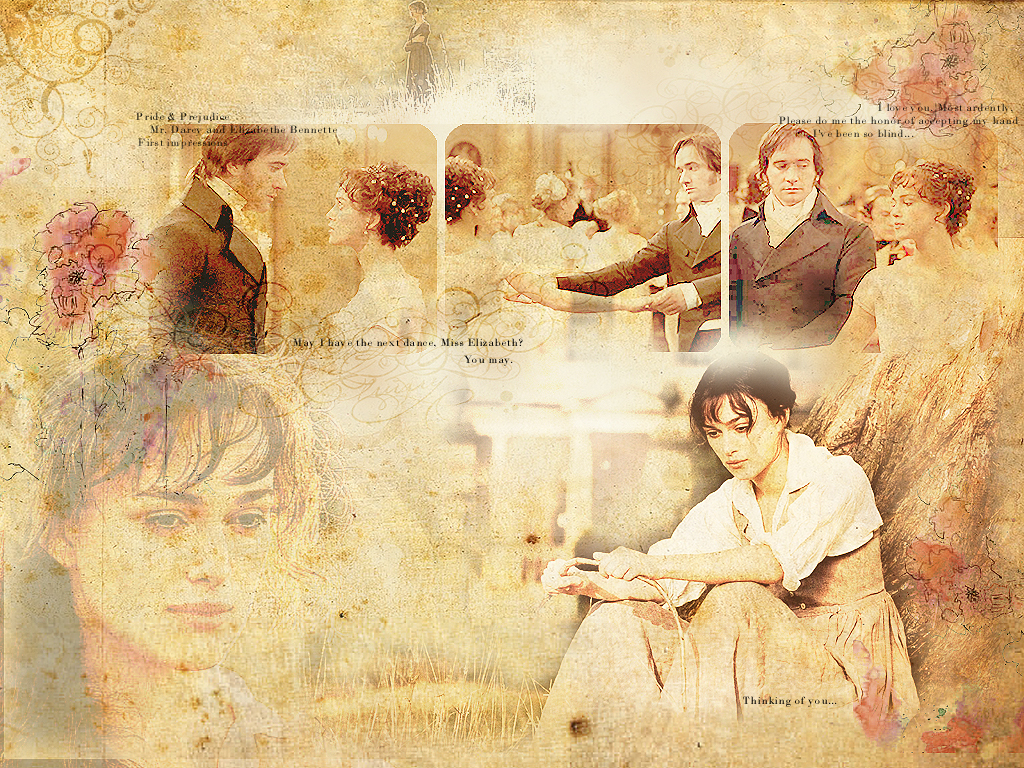
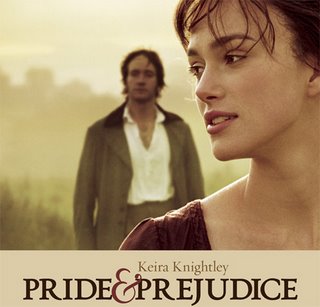
Since women were deprived of the liberty to earn or inherit money, marriage was their safety net from a life of poverty and despair; thus, women felt that their only alternative was to compete on the marriage market. Men were the buyers; women were the sellers. Society encouraged young women "to exercise gamesmanship instead of honesty, to control rather than to share, and to live through others rather than to find their own fulfillment" . For these reasons, good marriages were extremely uncommon. However, a fundamental idea in Austen's novels was that a respectable marriage was an equal marriage in which man and woman were partners, and was therefore based on friendship, love, and esteem. In Austen's opinion, a person should "do anything rather than marry without affection". The paradigm of these ideas was the relationship between Elizabeth Bennet and Fitzwilliam Darcy in Pride and Prejudice. When Darcy insulted Elizabeth Bennet by telling her that he loved her despite "his sense of her inferiority," Elizabeth firmly told him that, even though he was rich and powerful, she "had not known [him] a month before [she] felt [he] was the last man in the world whom [she] could ever be prevailed to marry". Only after Darcy realized that he and Elizabeth were equals - equally intelligent, equally articulate, and equally proud and prejudiced - did Elizabeth give up her prejudice against him. Through her portrait of Elizabeth and Darcy, Austen made the reader believe in the possibility of love and identity, the chance for true love, because she showed it happening in the very midst of the forces that had traditionally worked against it.
CONSEQUENCES OF AN UNEQUAL MARRIAGE :
In contrast to the relationship of Darcy and Elizabeth, the relationship of Mr. and Mrs. Bennet in Pride and Prejudice and Mr. and Mrs. Palmer in Sense and Sensibility showed the consequences of disregarding the essential components, according to Jane Austen, of a happy marriage: equality, respect, and love. Mrs. Bennet, "a woman of mean understanding, little information, and uncertain temper," was not Mr. Bennet's intellectual equal; instead, she was merely a pretty face. Likewise, Mr. Palmer was captivated by an airhead with a pretty face and, unfortunately, he "cannot give her back". As a result of their unequal and unfulfilling marriages, Mr. Bennet spent his life making fun of Mrs. Bennet and "belittling his responsibilities to her, to his children, and to his society," while Mr. Palmer was invariably rude to his wife and almost everyone around him .
WOMEN'S RESPONSIBILITY FOR THEIR OWN ACTIONS:
Regardless of a woman's ultimate decision to marry or to remain single, Austen did not present an innocent heroine imprisoned in a marriage for which she was not responsible. Although their options were limited and unpromising, Austen's women were not forced to marry. In Pride and Prejudice, Charlotte Lucas chose to marry Mr. Collins "with her eyes open". Furthermore, although all of them ultimately chose to marry, Austen's heroines made the reader believe that they might not have married, like Austen herself, and "yet lived, within the narrow limits of their confining society, purposeful and interesting lives".
SOCIAL DECORUM:
Next, middle class women in the eighteenth and nineteenth centuries were not encouraged to think of themselves as "members of the nation of individuals". Social decorum taught women "to practice propriety instead of displaying their intelligence, to practice self-denial instead of cultivating self-assertion, and to think of themselves collectively, in terms of universals of the sex, instead of contemplating individual autonomy, talents, and capacities or rights". In Sense and Sensibility, Marianne referred to this idea when she remarked, "I suppose I have erred against decorum. I should have been dull and spiritless and talked only of the weather...". Throughout the movie adaptation, it is apparent that, when writing the book upon which it is based, Austen herself was "caught between her attraction to Marianne's sincerity and spontaneity, while at the same time identifying with the civil falsehoods and the reserved polite silences of Elinor" .
FREEDOM:
Due to the confinements society placed on women, Austen's heroines looked to different activities not only for enjoyment but also for freedom. "They were not always useful, but they were usually busy. They knew how to find pleasure in passing the time in what seemed to them useful activities, needlework, sketching, music, visiting," and sometimes used those activities to gain freedom from the strictures of society. For instance, in Sense and Sensibility, Marianne freed herself from engagin in frivolous and sometimes degrading conversations by playing the piano, by sketching silhouettes, by reading poetry, or by taking walks. Country walking was Austen's principal symbol of freedom because, during this time, a minor rule of propriety prohibited young ladies from taking solitary walks. Thus, when Elizabeth Bennet went on a solitary three-mile walk, she was symbolically asserting her freedom and independence from the rigidity of social codes.
By contrasting Elizabeth with her sister, Jane Bennet, Austen showed the advantages of asserting one's freedom. Whereas Elizabeth was "satirical and quick at articulating her judgments," her sister Jane was unwilling to express her needs or desires and "supportive of all and critical of none". While silent Jane remained captive at Netherfield, Elizabeth boldly asserted her freedom and walked three miles to nurse Jane back to health. While Jane hopelessly waited for visitors to arrive at the Gardiners' house, Elizabeth traveled to the Collins's house where she visited Lady Catherine.
CONCLUSION :
In conclusion, Jane Austen took a "stratified society absolutely for granted and examined the female powerlessness that underlied monetary pressure to marry," the injustice of eighteenth and nineteenth century laws and customs, and the suppressed individualism of females. Through her novels, Austen gave a voice to the women of her time, and, in doing so, gave a voice for the society in which she lived. But, Austen's own voice was not lost among the others; she spoke loud and clear in the outcome of her stories because, despite the existing female condition, the heroines in Sense and Sensibility and Pride and Prejudice overcame society's barriers by marrying for love instead of money or future well-being, by expressing their true selves, and by asserting the small amount of freedom that they were allowed, all of which society considered to be appropriate behavior, all of which Jane Austen considered to be essential to a happy and fulfilling life, and all of which are relevant to women even today.