The 18th and 19th Century Society
By: Eman Sahab Al-Mutairi
The 18th century and the 19th century are two different centuries which was controlled by its own society. These two societies also influenced by many things. I will mention them specifically in this article and how these societies influenced by them.
In the 18th century owning lands was the main form of wealth. They either owned land as an inheritance, or given by the pleasure of the king. The society was divided into class, the top were the nobility below them were a class of nearly rich landowners called the gentry. In the 19th century society the amount of value that placed on lands puts the value on the person that own it means that the person well examined by how much land or wealth he possess. In the 19th century 80% of the population was working class. In order to be considered middle class you had to have at least one servant.
In the 18th century society land was the basis of economy. Except for Britain, the quality of the harvest was the most important fact of life for the overwhelming majority of the population. Since the landowners were the aristocracy, they either influenced or had direct control over the peasant's lives. The 19th century society, most people were depending on agriculture. Most people did not own land. The land was owned by a few, such as hacendados or the Roman Catholic Church.
In the 18th century, the nobility of that country lived in the most magnificent luxury that the order had known. On the continent, the nobility were wealthy. However, the noble was, to some extent, better off than a prosperous peasant was. This is because the peasant tended to prosper with the rest. In the 19th century Aristocracy was and still is an inherited position. The only other ways to attain a title were to marry into it if a woman, or to earn it through some sort of extraordinary service to the monarch. Military service and victories was one way. Another was to assist the monarch in other services-estate planning, building of real estate( architect of palaces then personal residences). A royal's doctor might have a peerage title given him in appreciation of services.
I mentioned how community, economy and nobility affected the society of the 18th and 19th century. We have a lot of things that affected the two societies but the most effectible ones are community, economy and nobility.
References:
- http://www.history1700s.com/articles/article1004.shtml
- http://www.localhistories.org/18thcent.html
- http://www.localhistories.org/19thcent.html
The Early Life and Education
By: Anwar Al-Enizi
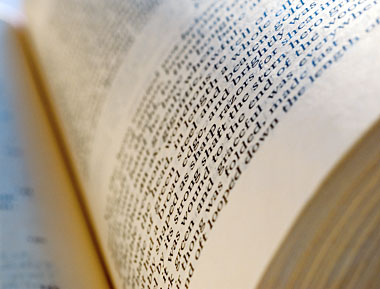
Daniel Defoe
Daniel Defoe was born in the year 1660 to a poor .He was the son of a butcher and very little education. He was a great traveler as young man and went all over Europe. He was originally christened , he change his name around the age of thirty five to sound more aristocratic. Defoe was a third child . His mother and father , James and Mary Foe were Presbyterian dissenters . James Foe was a middle class and candle merchant . Defoe attended a respected school in Dorking , where he was an excellent student , but as a Presbyterian , he was forbidden to attend Oxford or Cambridge . He entered a dissenting institution called Matrons Academy . Defoe successful as a merchant establishing his headquarters in a high – class neighborhood of London .
Jane Austen
Jane was born on 16 December 1775 , in Steventon , a small Hampshire village near Basingstoke , the third of her parents eight children . Her parents were intelligent , sensibly educated, and sociable . Her father George Austen married Cassandra Leigh , they had six sons and two daughters . The two girls were taught by a Mrs Cawley at Oxford and afterwards at Southampton but became ill there , next they went to the Abbey School at Reading in Berkshire . She left it at the age of nine , and her education continued effectively at home . Her father prepared two of his sorts for Oxford and taught some pupils as well . There was a good deal of reading aloud in the family : poems , plays, and novels . The parents encouraged her and created a cultured atmosphere to grow up in , Jane knew French and Italian , play the piano, draw, sew, embroider, dance, and converse very well indeed .
References:
2. Robinson Crusoe novel by Daniel Defoe [Introduce the Author]
3. Pride and Prejudice novel by Jane Austen [Jane Austen as Author]
Daniel Defoe's Works and Style
By: Esraa Al-Najjar
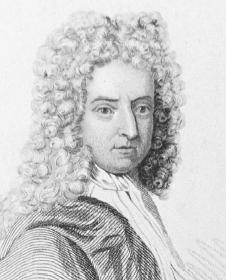
Daniel Defoe is the son of London butcher, and educated at a Dissenters' academy(which has different opinion). He was a simple of a new man who's reading prominence in England in the 18th century. He was an English novelist and poet. He wrote more than 500 books, pamphlets, articles and poems. His writing is always straight forward and produced with an amazing concern for circumstantial (containing details that strongly suggest the truth) details.
He published hundreds of political and social works between 1704 and 1719. In 1920, he focuses on weekly journals as Mist's and Applebee's,criminal biographies and studied economics and geography which affects his later major fiction
Daniel Defoe was the first one who wrote novels. He was sixty when he started to write it.
Now I am going to mention some of his famous works:
1- Captain Singleton 
Daniel Defoe describes the life of an English man who stolen from his family as a child.Then the Gypsies (people who spend their life traveling) looked after him . The first half of the book talks about how Singleton goes to Africa and the later and the last half talks about his life as a pirate (the one who attacks ships at sea). Defoe in this novel focuses on economics and logistics. So he makes him more like a merchant adventure.
2- Robinson Crusoe (1719)
It's considered the first novel in English. It's a fictional and biography based on a true story. It's about an English castaway (a person who's shipwrecked and lifted in isolated place) who spended 28 years on a tropical island near Venezuela. Defoe used the tiqneque of Journals in his Robinson Crusoe.
3- The Farther Adventure of Robinson Crusoe (1719)
It's the second and last part of Robinson Crusoe's life. It has many accounts of travels around 3 parts of the world written by himself. In this novel he made a map for the world.
4- A Journal of the Plague Year (1722)
Plague (flat piece of stone or metal that is fixed on a wall). The novel is a fiction. It's an account of man's experiences of the year 1665 in which the Plague struck London. The novel doesn’t have sections or chapters. The events in it is told in chronologically order.
5- Memoirs of a Cavalier (1720)
It's a historical fiction. It was between the English Civil War and the Thirty Year's Wars. The novel is about a journal of the wars in Germany and England written by an English gentleman who was a server in the army then in the royal army.
6- Mall Flanders (1722)
A story of a beautiful and greedy woman who start to do crimes. It's combining between fiction and biography.
7- Roxan the Fortunate Mistress (1724)
It's about a woman who takes many pseudonyms (a name used by some one who's not his/her real name). She falls from wealth to prostitution (a forbidden activity concerns with women specially) by a fool of husband.
· http://www.answers.com/topic/daniel-defoe
· http://en.wikipedia.org/wiki/Daniel_Defoe
Jane Austen's Works and Style
By Ebtesam Al-Enezi
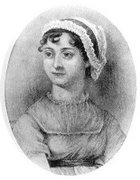
Her style :
Her writing style was elegant and satirical. Jane's work marked the transition in English literature from neo-classicism to romanticism.
Jane Austen wrote about her world and the things that she knew best and what she believed in. Her intricate detail outlines human behavior precisely and accurately. Humor is enjoyable as some of her characters make big pompous displays and occasionally make fools of themselves. She portrays life as it truly is and that is even accurate in modern ways today.
Her Novels:
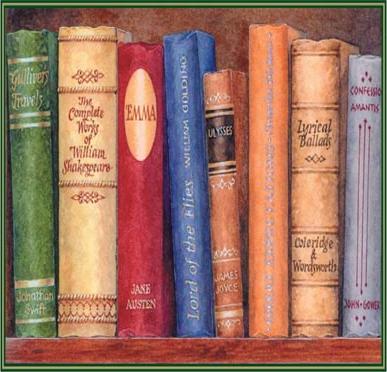
Sense and sensibility was first major novel of Jane Austen. The main characters are Elinor Dashwood and her sister Marianne. The first draft was written in 1795 and the titled was Elinor and Marianne. In 1797 Austen rewrote the novel and titled it Sense and sensibility. After years of polishing, it was finally published in 1811. As the original and final titles indicate, the novel contrasts the disposition of the two sister.Elinor governs her life by sense or reasonableness, while Marianne is ruled by sensibility or feeling.
The plot favors the value of sense over that of sensibility, the greatest emphasis is placed on the moral complexity of human affairs and on the need for enlarged and subtle thought and feeling in response to it.
Pride and Prejudice:
In 1796, when Austen was 21 years old, she wrote the novel First Impression. In 1813Austen rewritten and published under the title Pride and Prejudice. It is her most popular and perhaps her greatest novel. It is about the main characters Elizabeth Bennet and Fitzwilliam Darcy. Elizabeth is guilty of prejudice against the aristocratic Darcy, and he manifests excessive pride in his cold and unbending attitude toward Elizabeth, her sister Jane, and other members of the Bennet family.
Mansfield Park:
In 1811 Jane Austen began Mansfield Park, which was published in 1814. It is her most sever exercise in moral analysis and presents conservative view of ethics, politics, and religion. The novel traces the career of Fanny Price, a Cinderella-like heroine, who is brought from a poor home to Mansfield Park, the country estate of her relative, Sir Thomas Bertram. She is raised with some of the comforts of her cousins, the children of Sir Thomas, but her social rank is maintained at a lower level.
Emma:
Before Mansfield Park was published, Jane Austen began a new novel, Emma, and published it in 1816. Emma is a girl of high intelligence and vivid imagination who is also marked by egotism and a desire to Dominate the lives of others.
Persuasion:
Persuasion, begun in 1815 and published posthumously in 1818, is Jane Austen's last complete novel and is perhaps most directly expressive of her feelings about her own life. The heroine, Anne Elliot, is a woman growing older with a sense that life has passed her by. Several years earlier she had fallen in love with Captain Wentworth but was parted from him because her class-conscious family insisted she make a more suitable match. But she still loves Wentworth, and when he again enters her life, their love deepens and ends in marriage.
The Use of the Elements of Form
By: Tahani Mohammad

Daniel Defoe and Jane Austen are a very famous writers, and they all an important standard bearers of the literature . Authors ,writers ,and students from all around the world learn from them and study anything belongs to them. And because they live in a different society and different century , Defoe and Jane has a distinct use of the elements of form in their novels.
Jane Austen for example , she wrote stories about the daily social life in England in the 18th and 19th centuries. Her plots are masterly and original , they always focus on misunderstood feelings, human weakness and social obligations. Thus her plots often end up with one married at least. She mostly like to make connections between love, married, and money in her themes. She tried to show us a very completed picture of the story , then make us live in this picture by given events and characters from the real life and by make the story in a very simple language with a balanced dialogue , and at the end she give us moral lessons with the probable consequences of the events . Her sensitivity to universal patterns of human behavior has caused Austen to be regarded by many critics as one of the greatest of all novelists.
Daniel Defoe in the other hand , wrote many of his works on an uncounted subjects, from politics , religion , geography, travel and up to the supernatural. He often writes his political works in form of satires. So they were popular with the public but earned him powerful enemies. As a consequence, his attacks got him into trouble, even landing Defoe in jail. He was the first writer who wrote novels about believable characters in realistic situations , by using simple but rich language in form of prose. He also helped to define the new genre of the novel by using the realism and naturalism in his novels.
He often focus on the actual conditions of everyday life . In addition , his style of drawing his characters is an innovation, which became the new standard for the English novel. He dispense with ornate and showy style associated with the upper classes characters , and the use of the simple and direct fact-based style of the middle classes characters.
Daniel Defoe vs. Jane Austen
By: Amena Mubaraki

Both writers as we have noticed did a great efforts in the development of English novel, Daniel who is pamphleteer, novelist ,he is the fonder of English novel. Jane on the other hand, wrote six novels. She actually has an important role in correcting the society at that time. These two writers lived in different centuries. Although it is not that much far, but we could distinguish between them.
If we start to talk about Defoe and his work; this writer lived during eighteen century, he wrote novels, pamphlets, and journals. I will concentrate particularly in his novels. We all know the story of adventure “Robinson Crusoe ”. It is a story of an ordinary man who has been shipwrecked on the island for so many years. Being alone on the island and trying to adapt with new and different environment, was a big challenge for Robinson (the protagonist ). Defoe has created his according to many important aspects. When we read and analyze this text, we learned religious lesson, which appeared in the conflict in the very begging of the story. Robinson as we know go through many voyages from hill to the island. Every simple event happened in each journey, helped him to reach maturity. Moreover, this story teach us a lot of moral lessons, and show us clear picture about ourselves and impulsive behaviors.
The second is a female writer, who lived during the end of eighteen century and the first half of nineteen century. Jane Austen wrote a lot of great works which have its influences in the English history. One of these works is the well-known novel “Pride and Prejudges”. This story had written for social purposes, Austen wrote the events by using three main devices, which are satire, irony and understatement. Jane satirizing her society ironically in this story. Briefly, the story is going around first impression, or stereotyping between the hero and heroin, this which led to the climatic moment till we reach the resolution which is the ideal marriage .
In conclusion, Defoe and Austen, had their great role in the rising of the novel. We could not compare between them because both complete each other. The begging was with Defoe and Austen; I wrote about them according to the same aspects. Therefore, both of them are powerful writers in the English literature.
Jane Austen & Daniel Defoe Against the Flow
By: Eman Azzahrany
In Jane Austen’s time, there was no real way for young women of the genteel classes to strike out on their own or to be independent. Manly professions -such as engineering-, politics or economics were not open to women. Only a few occupations were open to them, and those few did not put them in high positions. For example, women worked for highly prestigious families as governesses. Therefore, most "genteel" women could not get money except by marrying or inheriting. To be able to inherit, a woman must be so fortunate because she has to have no brothers. In addition, unmarried women also have to live with their families or with family-approved protectors. It is almost unheard of for a genteel young woman or never-married female to live by herself, even if she is an heiress. When a young woman leaves her family without their approval, this is a very serious symptom of a radical break, such as running away to marry a disapproved husband, or to go into an illicit relationship such as when Lydia leaves the Foresters to run away with Wickham. The status of women was important factor that affected Jane Austen as a female novelist. She hated the way people looked at woman and tried to make woman equal to men.
Daniel Defoe was recruited as a spy. This may have happened in1695, when he was appointed to the post (possibly a cover) of accountant to commissioners of the glass duty. Certainly, the Secretary of State, Robert Harley, was instrumental in obtaining his release. In 1706 he was sent up to Scotland as an agent working towards the Act of Union. Defoe's own unreliable testimony to this time was that he was involved in "a special service...in which [he] had to run as much risk of [his] life as a grenadier upon a counterscarp" Defoe says. Harley was dismissed from the government in 1708. Then, Defoe left his job and went to work for Godolphin. During this time he edited and wrote the pro-Whig "Review" newspaper. In 1710 Harley returned to office and Defoe went back to working for him again. In 1714 he was imprisoned for libel but continued to produce his newspapers. He was sent free on the orders of the Secretary of State, Lord Townsend. He then resumed his spying during the period of the 1715 Jacobite Rebellion.
Anonymously he wrote and published as many as four newspapers at a time - sometimes as frequently as three times a week. Working at such speed,Defoe could be repetitive and contradictory. He could write anonymous letters and reviews praising, recommending or reviling himself. Defoe was a great writer who stood against the idea of seeing the middle-classed people as lower creatures.
Later Life and Death
By: Tahani Ali Al-Hammami
Daniel Defoe
As we see, the general characteristic of the first sixty years of Defoe's life, were years of change, struggle and almost incredible toil. Up to this time he had made no great and enduring contribution to his country's literature. He continued to write for the government of the day and to carry out intelligence work. At about this time, too, he wrote the best known and most popular of his many didactic works, The Family Instructor (1715). Also, he had produced some 560 books, pamphlets and journals, but the works for which he is best known belong to his later years. Robinson Crusoe, which is a successful novel that promises to delight the world so long especially the adventurers and lovers of the wonderful and exciting events, appeared in 1719; then, he wrote The Farther Adventures which is following a few months later. What is more, we notice that the next five years saw the appearance of his most important works of fiction. In 1722, he wrote Moll Flanders, A Journal of the Plague Year, and Colonel Jack. In point of fact, Defoe displayed his finest gift as a novelist; that is, he showed us his insight into human nature through his works. In 1724, he wrote A Tour Thro' the Whole Island of Great Britain. Also, in the same year, he published his last major work of fiction, Roxana, though in the closing years of his life. Despite failing health, he remained active and enterprising as a writer. Through his writings you may notice that Defoe's characters, the men and women, he wrote about are all placed in unusual circumstances. They are all, however, in one sense or another, solitaries; they all struggle, in their different ways, through a life that is a constant scene of jungle warfare. In fact, they all become, somehow, obsessive. On the other hand, his novels are given verisimilitude by their matter-of-fact style and their clear concreteness of details. Moreover, Defoe's influence on the evolution of the English novel was enormous, and many consider him as the first true novelist. He was a master of the plain prose and powerful narrative with journalist's curiosity and love realistic details. His exceptional gifts made him one of the greatest reporters of his time, as well as a great imaginative writer who in Robinson Crusoe created one of the most familiar and resonant myths of modern literature. We notice that when Defoe published Robinson Crusoe, he was in easy circumstances, but in his later life he became again involved in difficulties. Even his strong and brave spirit was at last shaken by repeated misfortunes. Defoe beset by poverty and troubles; therefore, he wrote the year before his death: "I am so near my journey's end, and am hastening to the place where the weary are at rest; be it that the passage is rough and the day stormy, by what way so ever He please to bring me to the end of it, I desire to finish life with this temper of soul in all cases — Te Deum Laudamus." Defoe's magnificent vitality which had brought him through so much now at last broke. He died in London in 1731, and buried in the cemetery at Bunhill Fields, in the city of London.
References:
§ Oxford Concise Companion to English Literature, Margaret Drabble and Jenny Stringer, revised edition
§ http://www.britannica.com/EBchecked/topic/155842/Daniel-Defoe/1772/Later-life-and-works
§ http://www.mantex.co.uk/ou/a811/defoe-01.htm
§ http://www.luminarium.org/eightlit/defoe/defoebio.htm
Jane Austen
Jane Austen's life is notable for its lack of events. She does not marry although she has several suitors. For instance, Harris Bigg-Wither, a childhood friend who is six years younger than her and heir to a large family estate, proposes to Jane. She accepts him at first although she doesn't love him. The next day, she thinks better of it and withdraws her accepting feeling that it will be a mistake. In 1805, her father, George Austen, dies suddenly from illness. Consciously, Jane stops work on The Wastons, which is unfinished novel, that probably begins in 1804 and abandons in 1805, on her father's death. At the beginning of 1816, Jane notices a decline in her health, but she ignores that to continue her works she started, namely The Elliots (later to become Presuasion). With each passing day, Jane's health declines quickly, and her family notice that. Though progressively unwell, she maintains an upbeat attitude and plays off her illness to family and friends. By 1817, Jane is hard at work on a new project entitled The Brothers. Twelve chapters of this work are completed before her illness takes a serious toll on her. In the same year, Jane is forced to stop work due to her ever-increasing illness. As a result, walking becomes a chore, difficult and nothing can be done without loss of energy. In other word, her illness ultimately confines the author to her bed.  Later on, Jane pens a will; leaving almost everything to her sister Cassandra. In May 24, she moves to Winchester with her brother Henry and her sister Cassandra to seek medical treatment. On Friday, the 18th of July, 1817, during the early part of the day, she dies in the age of 41. Actually, it was not known what has caused her death, but it seems likely that it was Addison's disease, which is, unfortunately, at that time could not possibly have had a cure. By her death, she takes all the conclusions of her unfinished works. In many ways, Jane Austen embodies the very strong-natured, head-strong women that are her stories. They come from different circumstances with different backgrounds, even all seek the same thing in true love. It is an irony that such a thing eludes Ms. Austen herself. In the end, we are left with what are truly timeless pieces of art. Despite penning just six completed works, she has spawned a legion of followers that devour every word she wrote. In her life, and even after her death, but most importantly through her works, she has left all readers with the fanciful notion of love revealed and love enduring.
References:
§ Oxford Concise Companion to English Literature, Margaret Drabble and Jenny Stringer, revised edition.
§ http://www.janeausten.org/jane-austen-timeline.asp
§ http://www.poemhunter.com/jane-austen/biography/
§ http://www.janeausten.org/jane-austen-biography.asp
